
Who owns the CAD file and silicone mold you paid for?
You paid for the CAD and the silicone mold. That doesn’t automatically make them yours.
Short answer
Who owns CAD files and molds you paid for depends on which law applies and what was agreed in writing. Under Canada’s Copyright Act the author is by default the first owner of the copyright, and an assignment of it is valid only in writing signed by the owner. A mold is a separate thing; settle who keeps each before you pay. This is general information, not legal advice.
Who keeps what
This is a page for paper: print it or copy it out by hand, and fill it in as you ask. Nothing on this screen is sent anywhere. The marked entries are one imagined deal for a relief tile, not any shop’s rule or default. It is general information, not legal advice, and a lawyer decides a hard case.
1 Name the three things
Write down each thing the job makes: the CAD file, the printed master and the silicone mold. Each one can have its own keeper, so ask about each by name, not about “the design”. For each, note who keeps it and where that answer is written.
2 Ask who else may use them
Ask whether you may take the file to another maker, and whether the maker may use the file or the mold for anyone else. Tick the answer you got, or “not said” if nobody said.
3 Ask what happens after the job
Ask whether your files are kept or deleted once the job is done, and whether the mold is kept, and for how long. Write the answer down, even if it is “not decided yet”.
4 Ask who else sees it
If the shape is new or private, ask whether the work is kept confidential and whether the shop will put that in writing. Tick both boxes only when the answer is on paper.
5 Get it in writing
Write where each answer is agreed: a message, a quote or a contract, with its date, and keep your own copy. Ask us these questions too: at LOUEI 3D PRINT, you can have confidentiality and file ownership agreed per project, in writing, on request.
Who keeps what
Example, marked
1Three things
| Thing | Who keeps it | Written where |
|---|---|---|
| CAD file | me, a copy | quote message |
| Master | the maker | not yet |
| Silicone mold | the maker, for reorders | not yet |
2Who else may use them
Another maker may usethe file
- Maker may reuse it for others
- yes
- Ticked: no
- not said
3After the job
My filesdeleted when I ask
The moldkept; asked how long
4Who else sees it
- Ticked: Confidentiality asked
- Ticked: answered in writing
5Where it is written
Message or contractquote message, 3 March
General information, not legal advice. Keep your own copy.
Who keeps what · LOUEI 3D PRINT
A CAD file, a master and a silicone mold are three things, and each can have a different keeper.
If you paid for the CAD file, isn’t it yours?
Not automatically: under Canada’s Copyright Act the author of a work is its first owner, and an assignment of copyright is valid only in writing signed by the owner, so a payment is not by itself that writing.
Work made by an employee in the course of the job is the exception: there the employer is the first owner, unless agreed otherwise. A client who pays a shop is not its employer.
Designs registered as industrial designs follow a different rule: the Industrial Design Act makes the person a design was made for, for payment, its first proprietor. Which rule applies depends on what your file is, and a lawyer can say.
So if you want the file to be yours, ask for that before work starts and get it signed. If you only need to use it again, write down exactly how, in the same signed paper. This is general information, not legal advice.
Are the file, the master and the mold one thing or three?
They are three things: the CAD file is a digital model that can be copied and sent, while the printed master and the silicone mold are physical objects that one side holds, so settle each one in writing on its own.
Paying for the job does not tell you which of the three you take home. You may leave with the copies and nothing else, or with a file and no mold. Ask about each thing by name.
| Thing | What it is | Settle in writing |
|---|---|---|
| The CAD file | A digital model that can be copied and sent | Who owns it, whether you receive it, and in an editable or a neutral format such as STEP. |
| The printed master | A physical print of the shape, made to take a mold from | Who keeps it once the mold is made. |
| The silicone mold | A physical tool held by one side; it wears with use | Who keeps it, and whether you get the mold or only the copies. |
| The copies | The parts poured or printed from the master or the mold | What each side may do with them later. |
Who owns the silicone mold you paid for?
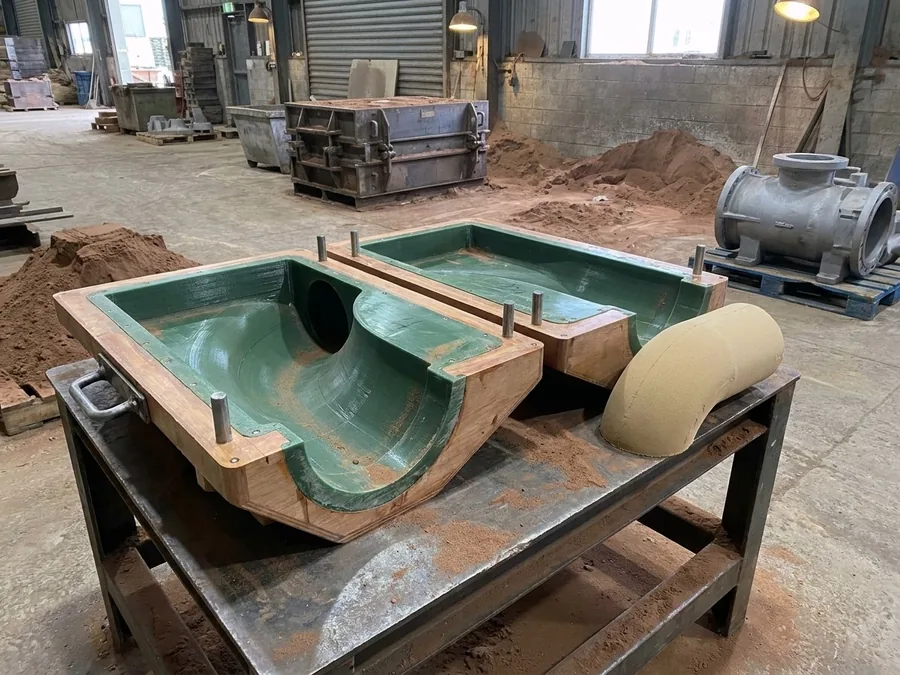
A silicone mold made for you is a physical tool, separate from the file and the master, so ask who keeps it, for how long, and whether you get the mold or only the copies, then get the answer in writing.
This guide does not say who owns a mold in law. That is a question for a lawyer, and the answer for the mold may differ from the answer for the file.
A mold also wears. One maker of mold rubber says a mold’s life depends on what is cast in it and how often. So if the shop keeps the mold for reorders, ask what happens when it wears out, and whether you will be told before it is thrown away.
Can you take your file or mold to another shop?
Only if what was agreed allows it, so settle it before work starts: ask whether you will receive the editable file or a neutral one such as STEP, and whether you will get the mold itself or only the copies made from it.
Keep your own copy of every file and drawing you are given, so your next step does not depend on one shop. Where the shop owns the file, ask in writing what you may do with it elsewhere.
- Photos of the original: the part as it was, before any work.
- The agreement: the message or contract that says who keeps what.
- The files you were given: saved where you can find them.
- Receipts: what you paid for, and when.
With these four, a new shop can start from what you hold, and a lawyer can see what was agreed. This is general information, not legal advice.
Before you contact any shop
Have these ready. Any shop will ask for most of them.
- Photos: the whole part on plain paper, the same view with a ruler beside it, and the break up close.
- The sizes you can measure, and what the part fits onto or into.
- Where the part lives and what it does.
- How many you need.
- Any file or drawing you have, even an old one.
At LOUEI 3D PRINT you can start from anything: an idea, a sketch, a photo, CAD, measurements, the broken part itself or a previous order. We read STEP, STL, OBJ, IGES, DXF, PDF drawings and photographs.
When this is not a job for a shop
- An author’s moral rights in a work cannot be assigned, only waived, and a transfer of the copyright does not waive them by itself.
- Copyright law treats designs applied to useful objects made in numbers differently from art; a lawyer can say how that applies to your part.
- If the agreement is unclear or a lot rides on it, a lawyer decides, not a shop: bring the agreement, your messages and the files you were given. This page is general information, not legal advice.
Some parts cannot be reproduced: parts that are badly damaged, parts with missing geometry, and parts that need a certification we do not hold.
Written by the LOUEI 3D PRINT team. LOUEI 3D PRINT makes custom and replacement parts: 3D scanning and reverse engineering, FDM and resin 3D printing, molding and casting. Serving North America.