
Custom jigs and fixtures, made for your shop
LOUEI 3D PRINT makes custom jigs, fixtures and holding nests, 3D printed in FDM or resin, from a photo of the slow step. You need no drawing: CAD design is part of the job. The review is free and a person replies within one business day.
It is seldom the big machine. It is the fiddly bit before it.
Name the step that keeps slowing your shop down
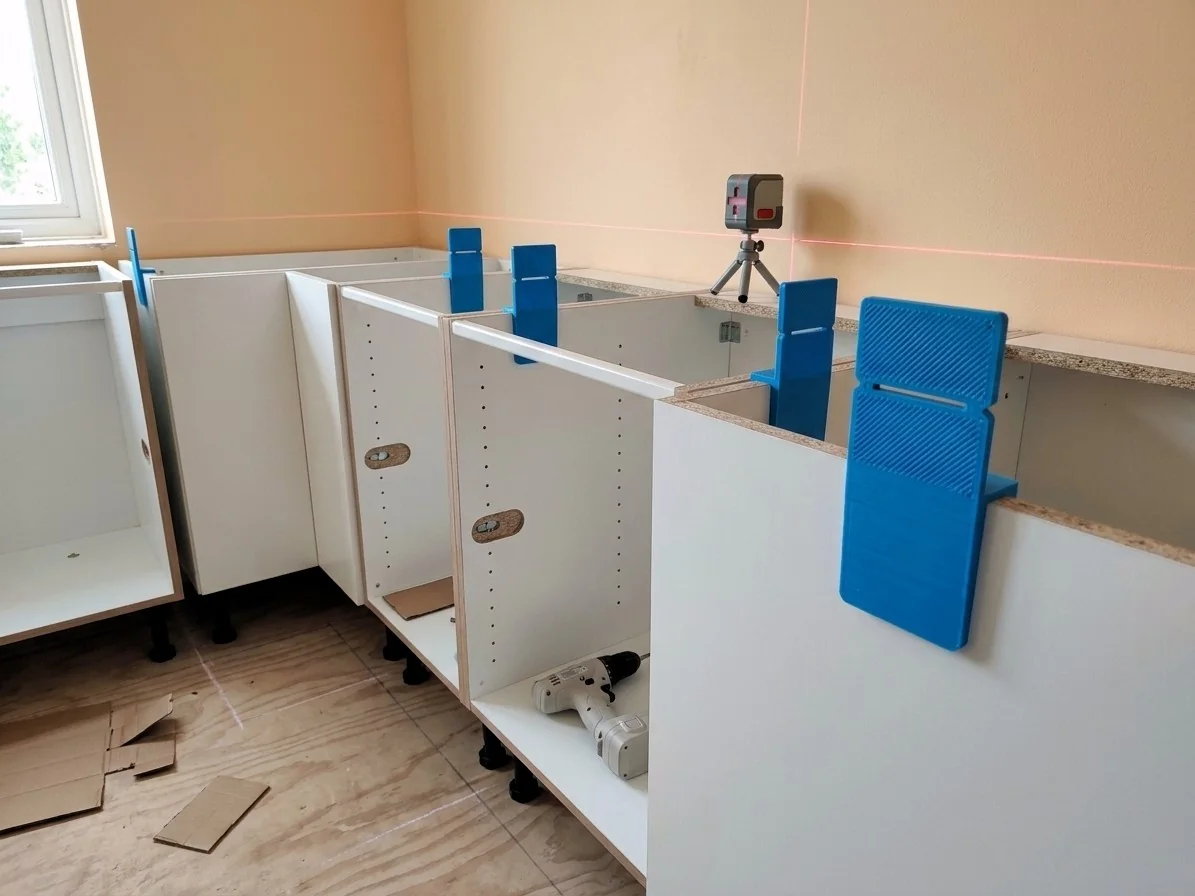
The bracket that gets marked out by hand every time. The row of cabinets set to a line, one at a time. The part someone holds with two fingers while the glue sets.
Everyone in the shop can name it. That step is what a tool is for: a jig, a fixture or a nest that holds the work or guides the bit, so nobody has to do it by feel. Printed, it can be shaped to the part in front of you.
If it stays in the product, it is a part, and a bracket or housing that stays on the machine has its own page. If it helps make the product, it is a tool.
Can someone make a jig or fixture for one step in my shop?
Yes, if plastic suits what the step does to the part. LOUEI 3D PRINT can make the jig from a sketch, measurements or your own CAD file as well as a photo, and a person reads every project. Tell us what the tool holds or guides, what it lines up against and what touches it. That decides the material, or whether plastic is wrong for the step.
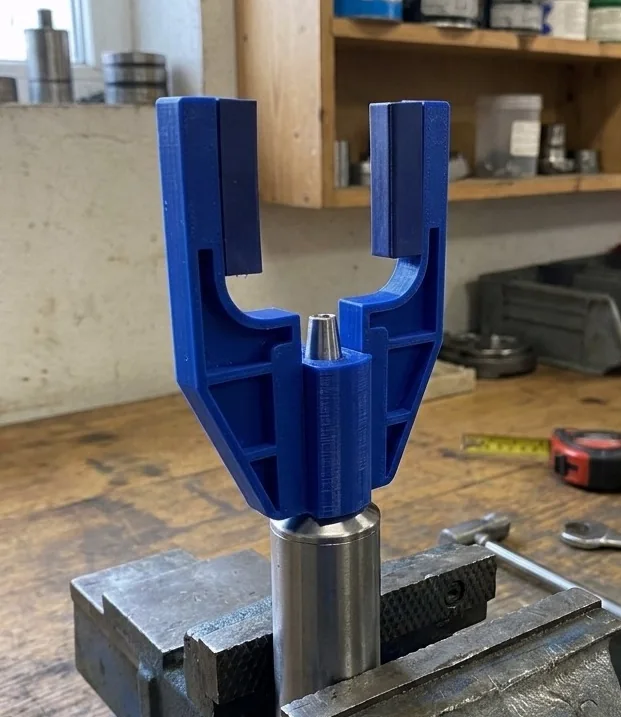
- Drill guides
- Assembly fixtures
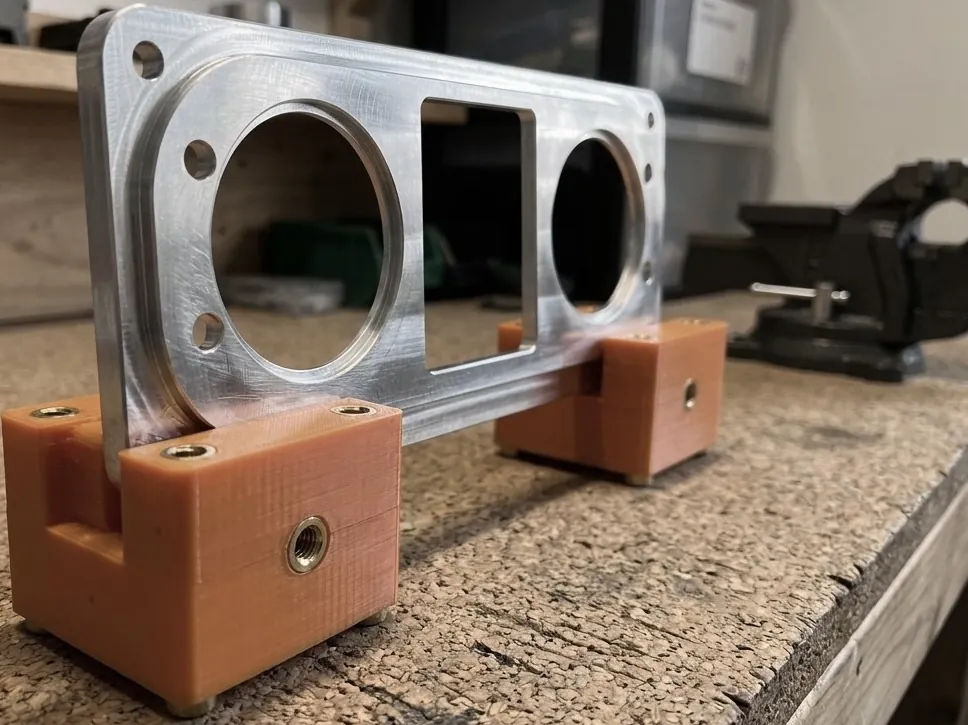
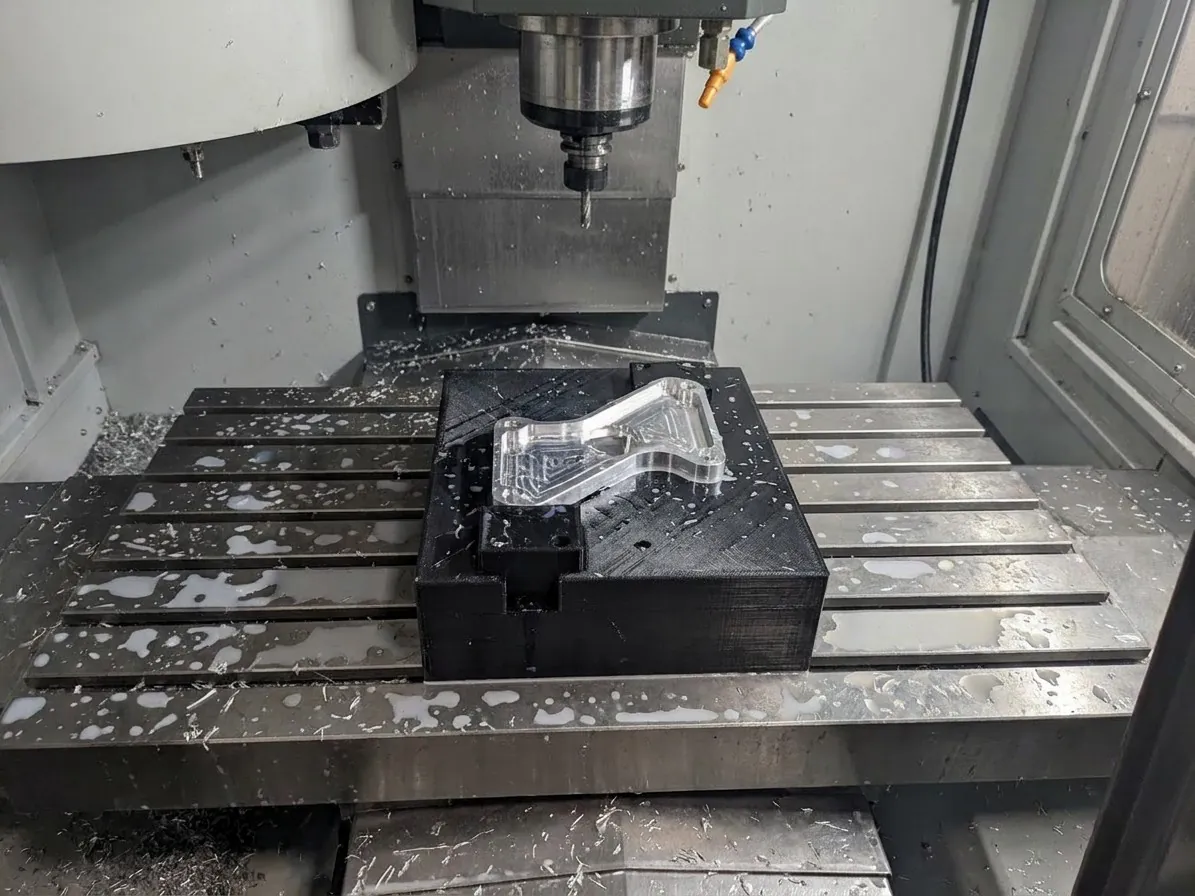
- Holding nests
Describe the step: what to send with no CAD
Answer these on paper and photograph the sheet, or copy them into your message. If it is a client's part, leave any part number or client name out of the photo. Only want a file printed? That is a single part printed from your own file.
- 1
The step
What it is for and what goes wrong today. Say it as you would at the bench.
- 2
What it holds or guides
A photo of the part beside a ruler, or a CAD file if you have one. Take it at a break, not while the machine runs.
- 3
What it lines up against
An edge, a face, a hole, a pin. If you can say only one thing, say this.
- 4
What touches it
Glue, oil, coolant, a drill bit.
- 5
How many
One-off parts are normal work. Say how many tools, and how many parts go through each one in a week or a batch.
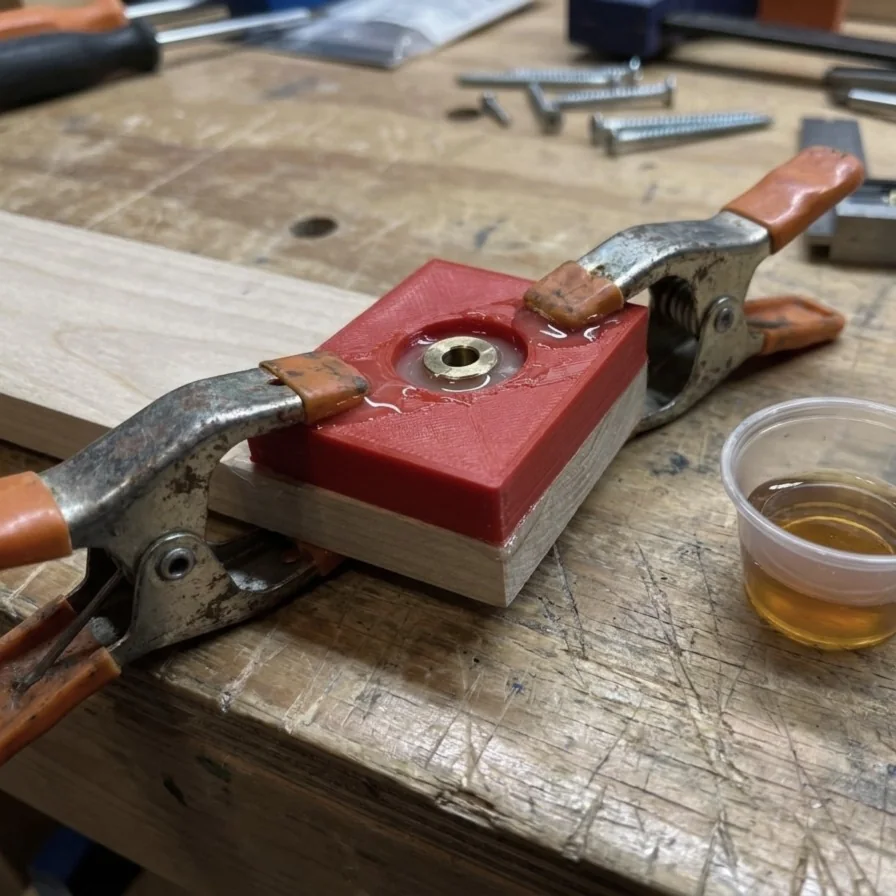
Assembly fixtures, holding nests and jigs
A jig holds the work and guides the tool. A fixture only holds the work, while something is done to it, and a nest is a fixture shaped to one part.
| Tool | What it does | What to send | What decides if plastic suits |
|---|---|---|---|
| Assembly fixture | Holds parts in position while your team joins them | Photos of the parts and the joint | What touches it, such as glue or solvent |
| Holding nest | Keeps one part in place while someone works on it | Photos of the part beside a ruler | How it loads and unloads, and what the part weighs |
| Locating block | Sets a part against an edge or a pin | Photos of the part, and what it lines up against | How it sits, and how often the part is moved |
| Drill guide | Guides a bit to the spot on round stock, tube or flat work | Photos of the part, where each hole goes, the edge or face it lines up against, and the bushing size, if you use them | What the bit cuts into, and how many parts pass through |
| Router or marking template | Shows where to cut or mark | Photos of the part, and the marks you need | What touches it, and where it sits |
Not sure which one it is? Describe the step.
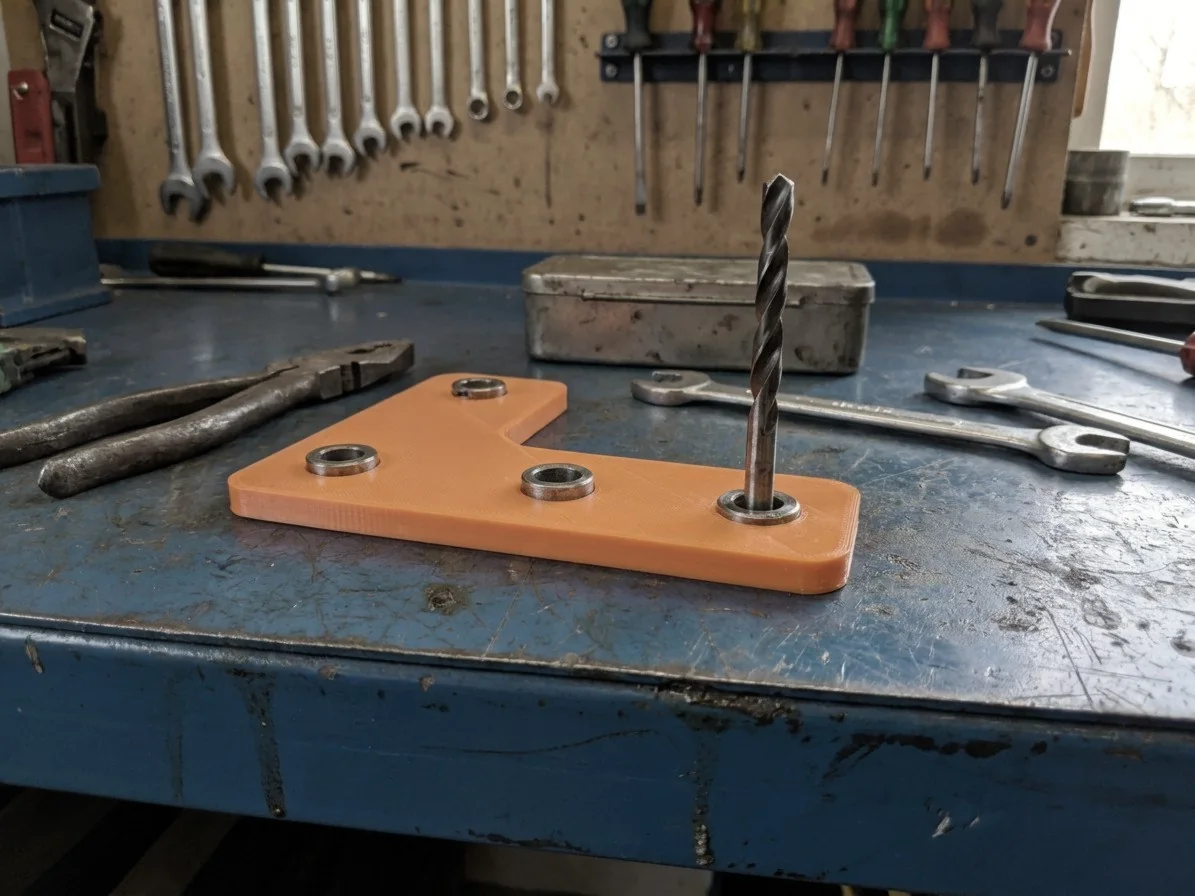
Drill guide jigs on the bench
A drill guide jig sized to your work takes the place of marking out every piece. Send photos of the part, where the holes go and what the guide lines up against. A bit turning in bare plastic wears the hole. If you want the guide shaped to take bushings you press in yourself, say so and give the bushing size.
Why 3D print a jig instead of cutting one
The shape can follow the part, including curves that are awkward to cut. A printer needs no cutter set-up for each new shape, so a single tool is a sensible thing to ask for. Printed, it is light to lift. A TPU face is soft, so it is gentler on work a hard edge would scratch. When it wears, you can order another.
For heavy loads and long runs, steel is often still the answer, and that goes through LOUEI Metal Arts, our sister company: two companies, one team, one quote.
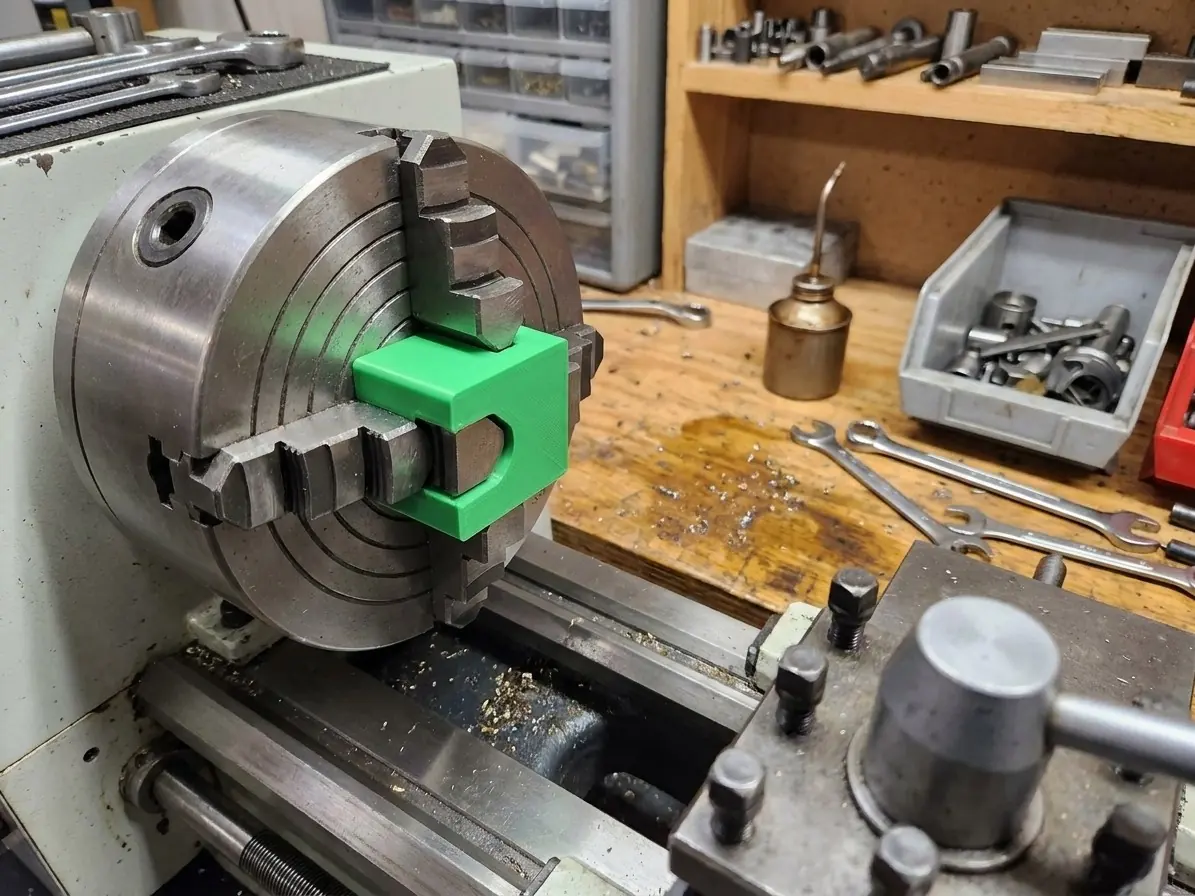
3D printed jigs: matching the material to the step
What the tool does to the part decides the material. A jig printed in PETG-CF or nylon is one route, and resin is another for small, intricate shapes.
- PLA A plain FDM filament For a template, where the tool only has to show a shape.
- PETG, ABS, ASA Everyday FDM filaments Everyday plastics for a guide or holder that sees light use. Name the job and the review says which.
- Nylon, PC FDM filaments Ask about these if parts slide against the tool.
- PETG-CF, PA-CF, other carbon-fibre blends Carbon-fibre FDM filaments The next question when plain filaments look doubtful.
- TPU A flexible FDM filament A soft face on a nest, where a hard edge would mark the work.
- Standard, tough (ABS-like), flexible, clear Resin, SLA or MSLA For small guides and nests with intricate shapes.
Printed tools wear, so plan for it
Plastic wears, and we will not give you a life figure for a printed jig.
The faces that rub or locate go first, so watch those.
Price depends on the part's function, the process, the material and the quantity, and it is confirmed before production. You owe nothing unless you approve a plan and production begins. How a job runs from review to production has its own page.
The review gives you these, or says what it still needs:
- Our view on whether plastic suits the step, and what would stop it.
- The process and the material, named for your step.
- What decides how long your tool takes.
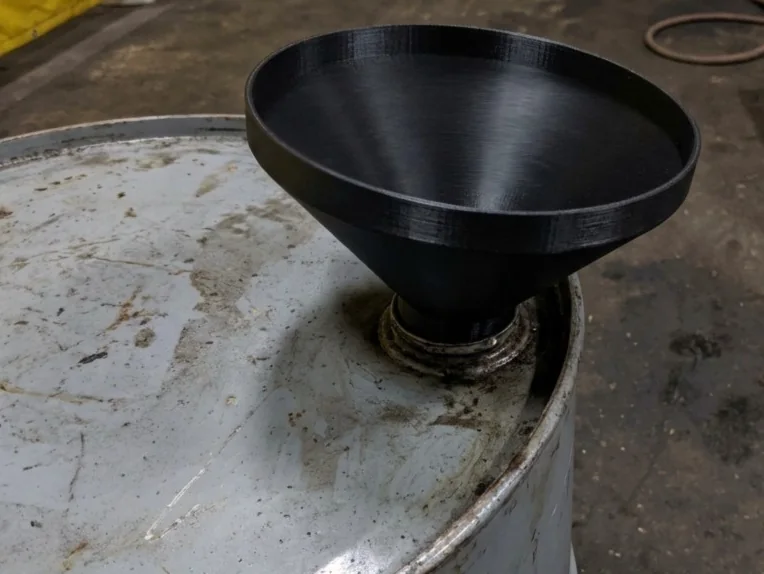
Funnels and kitting trays
Some tools never touch the work. They hold what you pour or sort.
A funnel seated in the drum opening. A kitting tray with a recess for each small part, laid out for one job.
Production aids like these end the same small annoyance every week. For a funnel, name what gets poured: plastic may not suit it.
When a printed tool is the wrong answer
Any of these can change the plan, so raise them when you send the step.
- A heavy load or a chemical you are unsure of: say so, and we will not promise plastic suits it.
- If the step cannot stop, ask for a second tool in the same order, or ask about steel through our sister company, LOUEI Metal Arts.
- We do not do SLS, MJF or metal printing here. FDM and resin only.
- Some parts need a certification we do not hold, and we say so.
Written by the LOUEI 3D PRINT team. Last updated 9 November 2026.
Questions shops ask about jigs and fixtures
Can jigs and fixtures be 3D printed for production use?
Often, for the right step. Plastic wears, so a step that only positions a part is an easier case than one that grinds against the tool all shift. We print jigs and fixtures in FDM and resin, and we give you our view for your step before anything is made.
Who owns the design when a shop makes a jig for me?
We agree confidentiality and file ownership per project, in writing, on request. If the jig holds a client's part, ask for that before you send more than a plain photo.
Can you draw a jig if I only have a photo of the part?
Often, yes. CAD design is part of the job, so a photo beside a ruler is enough to start, and the reply tells you what is missing.
How long will a 3D printed jig last?
It depends on what rubs against it and how often, so we give no figure. A template that only shows a shape sees little wear. A guide with a bit running through it, or a nest that parts slide in and out of all day, wears much sooner. Tell us what the tool does and how often, and the review tells you where yours sits.
Can you make a special tool for one repair?
Yes, if plastic can do the work. Tell us what the tool does and the force it takes. A puller or a wrench may need steel, so ask us about LOUEI Metal Arts.
If my jig wears out, can I order another?
Yes. Repeat orders keep the project information. Tell us which tool wore out and send a photo of it if you still have it.
How long does it take to get a jig?
We do not publish a time on this page. Put the date you need in your first message, and the free review tells you what decides it. A person replies within one business day.
Describe the step, then send it
One photo of the step is enough to begin, taken at a break. If you have a minute more, add your answers to the five questions.
You do not need to know whether it is a jig or a fixture. A person reads what you send and names it.
Send a photo of the step Ask a question first
Free review · Serving North America · Shipping is arranged per project