Prototype works. What has to change before you make 100?
That hour you spent fixing the prototype by hand? Multiply it by a hundred.
Short answer
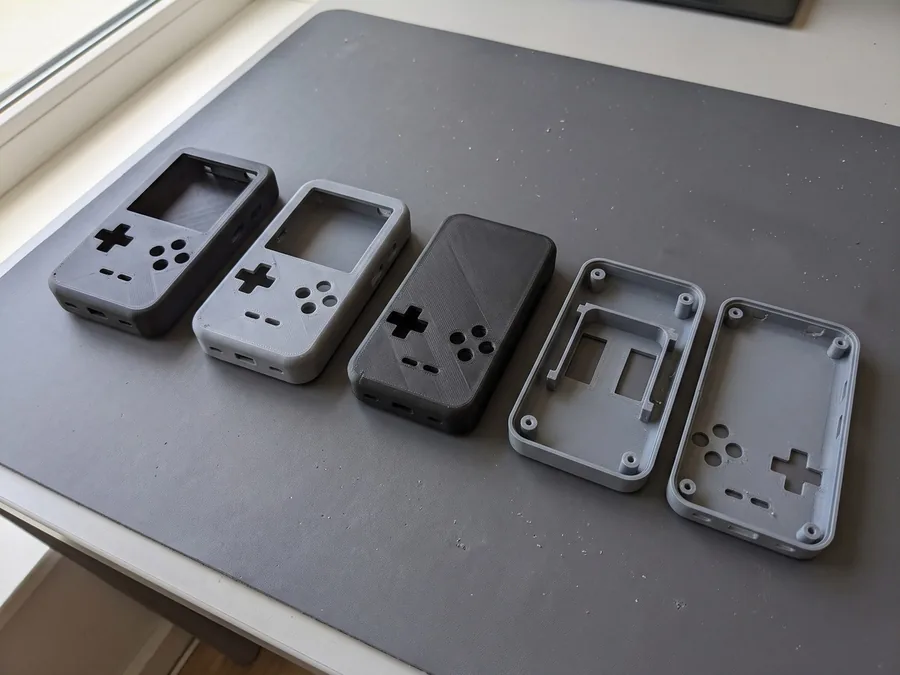
Going from prototype to low-volume production starts with the hand work you did once. List it, freeze one file version, and choose how the 100 get made. LOUEI 3D PRINT starts from your current file or the part itself, and the review is free.
The change list
This is a page for paper. It is not a form, and nothing on this screen is sent. Print it or copy it out, then fill it in with the part that worked in your hand. The marked entries are one example, a drawer bin. When it is done, one good prototype has become notes a run can be made from.
1 List what you did by hand
Go over the prototype and write down every trim, shim, notch or test fit you made after it came off the printer. At a hundred parts, each of those is done a hundred times. Where you can, change the file so the part comes out right without them.
2 Freeze one version
Pick the file that made the part that worked, and write its name and date on the sheet. Every copy comes from that version. If you change anything later, give the file a new name and say so.
3 Check the material
Write down what the prototype was made of and what the run must take: heat, load, sun or water. A material that was fine for checking shape and fit may not suit the real job. If you change it, test the part again.
4 Name the fits that must hold
Note every place a copy meets something: the drawer, a lid, the bin beside it. Those are the sizes that matter on every part. Keep photos of a good part and a bad one. Then try the first few copies in the real place.
5 Pick the route
Tick how the hundred will be made: printed again, poured from a silicone mold, or made by a mold shop. Three things decide it: whether every copy must follow one master, whether the shape will come out of a mold, and whether the design may still change. “Not sure” is a fair answer.
The 1-to-100 change list
Example, marked
1What I did by hand
| Done by hand once | At a hundred | Change in the file |
|---|---|---|
| Trimmed a corner tab | a hundred tabs | shorten the tab |
| Shimmed the base | a hundred shims | thicken the base |
| Cut a notch for the rail | a hundred notches | draw the notch in |
2Freeze one version
File and date I approvebin_v4, 2 November
Any later change gets a new name.
3Material
Prototype materialPLA
- The run must take
- heat
- Ticked: load
- sun or water
4Fits that must hold
Fitssits in the drawer grid, bins side by side
Try the first few in the real drawer.
5The route
- Ticked: Print again
- silicone mold and pour
- a mold shop
- not sure
How many100
The 1-to-100 change list · LOUEI 3D PRINT
Will 100 printed parts all match the prototype?
Not necessarily: 100 printed parts can differ a little from the prototype and from each other, because printed parts vary with the process settings.
A prototype that worked once proved the idea; a run needs it to work every time. Your prototype was also the one part you picked and adjusted by hand, while a run is every part as it comes. Differences too small to matter on one part can add up across a batch.
So test again whenever you change the file, the material or the way the part is made between the prototype and the run. Check a few parts from the run yourself against the part they fit before you rely on all of them.
- Gap between bins: small differences add up along a row.
- Outside width: the one size every bin must share.
- Flat base: it must sit level on the drawer floor.
Try the first few in the real drawer before the rest.
Do you need a new CAD file for the run?
You may not need a new CAD file for the run, but you do need to say exactly which version of the file it is made from.
Hand work you did on the prototype, such as trimming a tab or cutting a notch, is not in the file, so put it into the file, or tell the shop what you did so the change can be drawn into the file before the run. If you do not use CAD yourself, LOUEI 3D PRINT does CAD design that gets the file ready for a run as part of a job.
Write down the name and date of the version you approve, and change nothing in it afterwards without saying so. LOUEI 3D PRINT accepts STEP, STL, OBJ, IGES, DXF, PDF drawings and photographs, and repeat orders keep the project information.
| On the prototype | At a hundred parts | Change before the run |
|---|---|---|
| Hand trimming | The same hand work, repeated for every part. | Put the change into the file, or tell the shop what you did, so it can be drawn into the file. |
| How it lay on the build plate, and its supports | A choice made once is now made for every part. | Note which way it lay and why, and ask whether to keep it. |
| A joint you fitted by hand | A fit that worked once because you adjusted it. | Measure the part it joins and give that size to the shop. |
| Which file you printed from | One file version behind all of the parts. | Name the file and date of the version you approve. |
| How you judged the part good | A judgement you now repeat for every part. | Write down what good and bad look like, with photos, and check a few parts yourself. |
Should the 100 be printed again or cast from a mold?
Whether the 100 should be printed again or cast from a mold depends on the part’s shape and the number you need, not on one switch point.
Printing again keeps the file you just froze, so the part can still change between orders. Ask how many fit on one build plate: the hundred are made a plate at a time, and each plate’s set-up is shared by the parts on it. LOUEI 3D PRINT prints in FDM and resin: here is more on turning one working part into a printed run. Price comes from the part’s function, process, material and quantity, and is confirmed before production; bulk runs are priced by volume.
A silicone mold is made from one master, which can be a printed part, and the copies are poured into it. LOUEI 3D PRINT pours resin, plaster and cement. Casts follow the same cavity, so they repeat its shape, but a mold wears with use and with what is poured into it. One platform’s guide says cast copies only approximate production plastics and do not suit heavily loaded structural parts.
If the run may later move to a mold shop, ask what changes before you commit: a shape that prints fine may not release from a rigid mold, whose walls usually need a slight taper.
Was your prototype material right for a run?
Your prototype material may be right for the run, but only if it suits where and how every part will be used, not just the shape check.
A material that was fine for checking shape and fit may not take the heat, sun or chemicals of the real job. Materials also print differently, so changing one can mean changing the design too. Write the use on the sheet, and if the material changes, test a part again before the run.
LOUEI 3D PRINT stocks standard, tough, flexible and clear resins, and PLA, PETG, ABS, ASA, Nylon, TPU, PC and carbon-fibre blends. Tell the shop the use, not only a material name, so the choice is made for the job.
Before you contact any shop
Have these ready. Any shop will ask for most of them.
- Photos: the whole part on plain paper, the same view with a ruler beside it, and the break up close.
- The sizes you can measure, and what the part fits onto or into.
- Where the part lives and what it does.
- How many you need.
- Any file or drawing you have, even an old one.
At LOUEI 3D PRINT you can start from anything: an idea, a sketch, a photo, CAD, measurements, the broken part itself or a previous order. We read STEP, STL, OBJ, IGES, DXF, PDF drawings and photographs.
When this is not a job for a shop
- In Canada, the Motor Vehicle Safety Act sets standards for some vehicle equipment, so a hundred copies of a vehicle safety part are not a casual print run.
- Do not copy a part into a gas-fired or mains-powered product: in BC, gas appliances need a certification mark, electrical equipment needs a recognized certification or approval mark, and most gas and electrical work is for licensed people (general information, not legal advice).
- If the run must stand in for the real production part in a regulator’s submission, one platform’s guide warns that cast copies do not suit that job.
Some parts cannot be reproduced: parts that are badly damaged, parts with missing geometry, and parts that need a certification we do not hold.
Written by the LOUEI 3D PRINT team. LOUEI 3D PRINT makes custom and replacement parts: 3D scanning and reverse engineering, FDM and resin 3D printing, molding and casting. Serving North America.